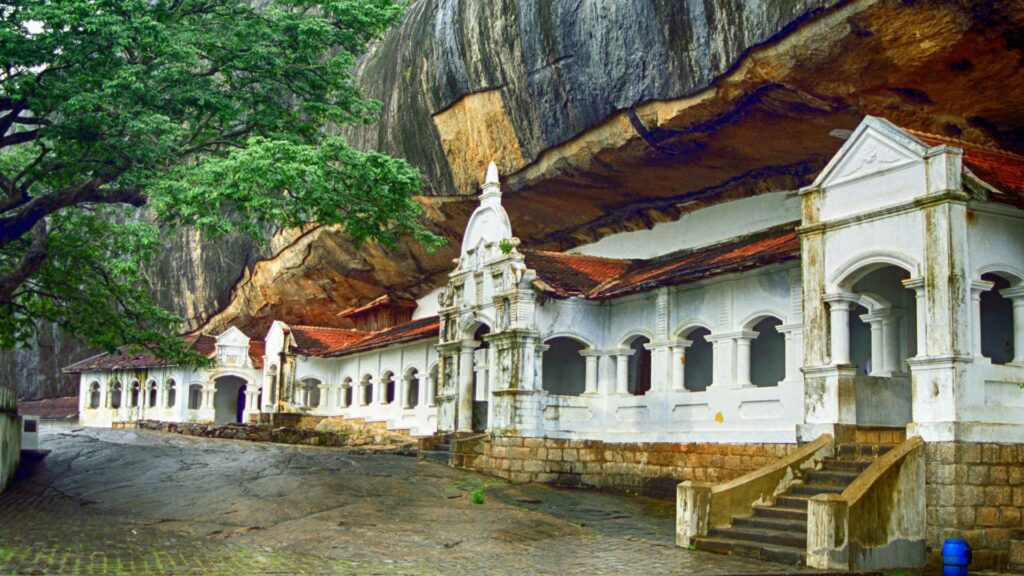
Right in the center of Sri Lanka’s Cultural Triangle is a truly remarkable destination. It is the Dambulla Cave Temple, also known as the Golden Temple of Dambulla. This is the largest and best-preserved cave temple complex in the entire country. It is a highly sacred pilgrimage site that has been in continuous use for over 22 centuries. The temple is built high up inside a massive rock mountain that rises directly out of the surrounding plains. Inside the dark caves, you will find hundreds of ancient statues and incredibly detailed ceiling paintings. Because of its massive historical and religious value, it is recognized as a UNESCO World Heritage site. This guide covers everything you need to know about visiting this spiritual wonder.
The Fascinating History of the Caves
The history of the Dambulla Cave Temple is a story of survival and gratitude. The story dates back to the first century BC. During this time, the capital city of Anuradhapura was invaded by a foreign army. The rightful ruler, King Valagamba, was forced to flee for his life. He traveled south and hid in the thick jungles of Dambulla. He found safety inside these massive natural caves.
The local Buddhist monks who lived in the forest protected the king and hid him for 14 years. Eventually, King Valagamba gathered a new army, fought back, and reclaimed his throne in Anuradhapura. To show his deep gratitude to the monks who saved his life, he transformed the rough mountain caves into a magnificent rock temple. Over the next thousand years, later kings continued to add to the temple. They painted the walls, carved new statues, and added protective roofs. Today, it stands as a brilliant monument to ancient Sri Lankan faith and art.
Exploring the Five Sacred Caves
The temple complex consists of five main caves. You reach them by climbing a stone staircase up the side of the mountain. Each cave is different in size and contains its own unique collection of statues and artwork. Here is what you will discover inside.
Cave 1: The Cave of the Divine King
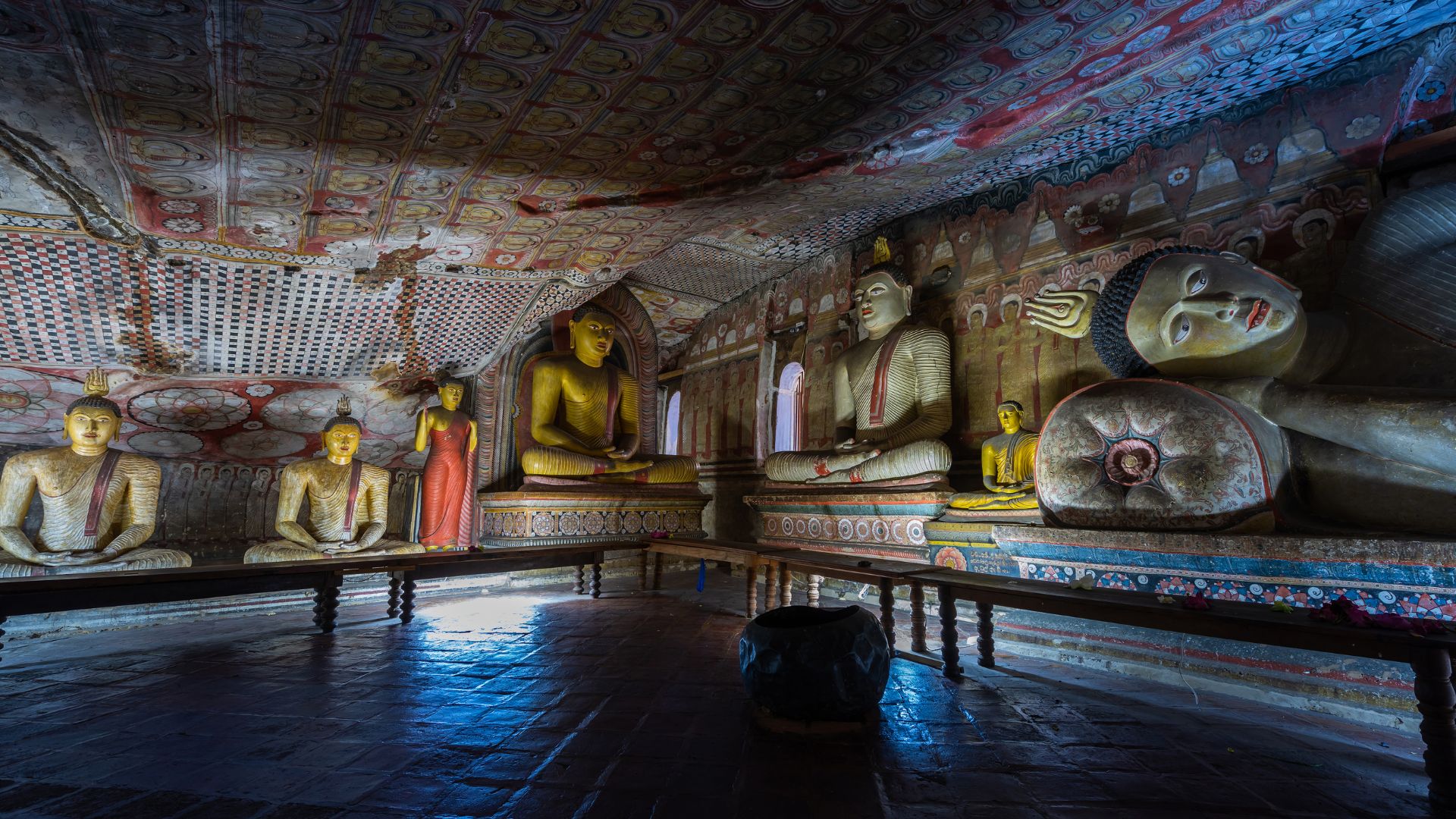
The first cave is called Devaraja Viharaya. It is completely dominated by a massive 14-meter-long statue of the reclining Buddha. The statue is carved directly out of the solid rock of the cave wall. The ancient artists painted the statue in bright yellow and gold colors. At the feet of the Buddha is a statue of his most loyal disciple, Ananda. The cave is narrow, which makes the giant statue look even more powerful and imposing. The walls are covered in ancient, faded frescoes that create a deeply spiritual atmosphere.
Cave 2: The Cave of the Great Kings
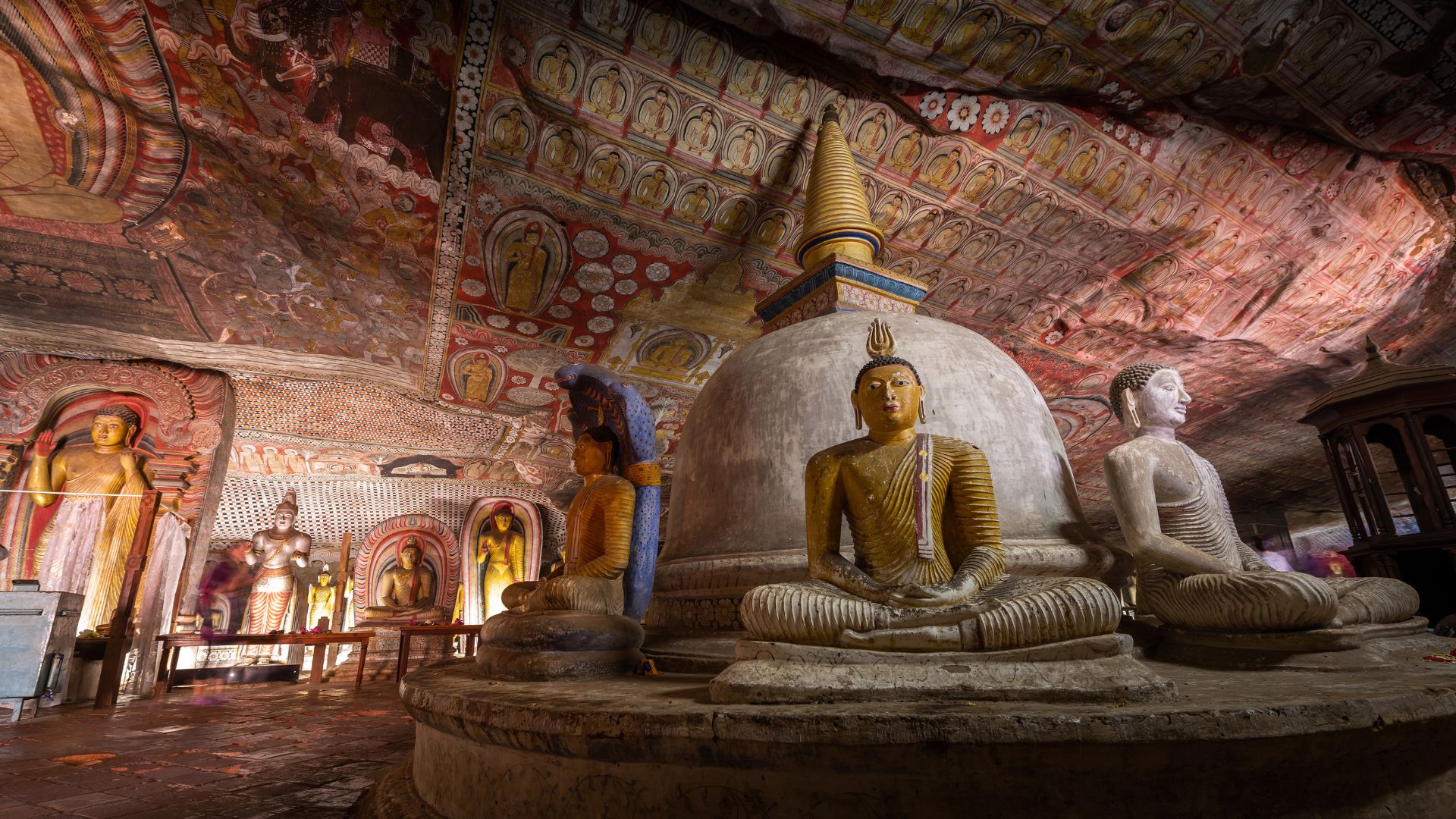
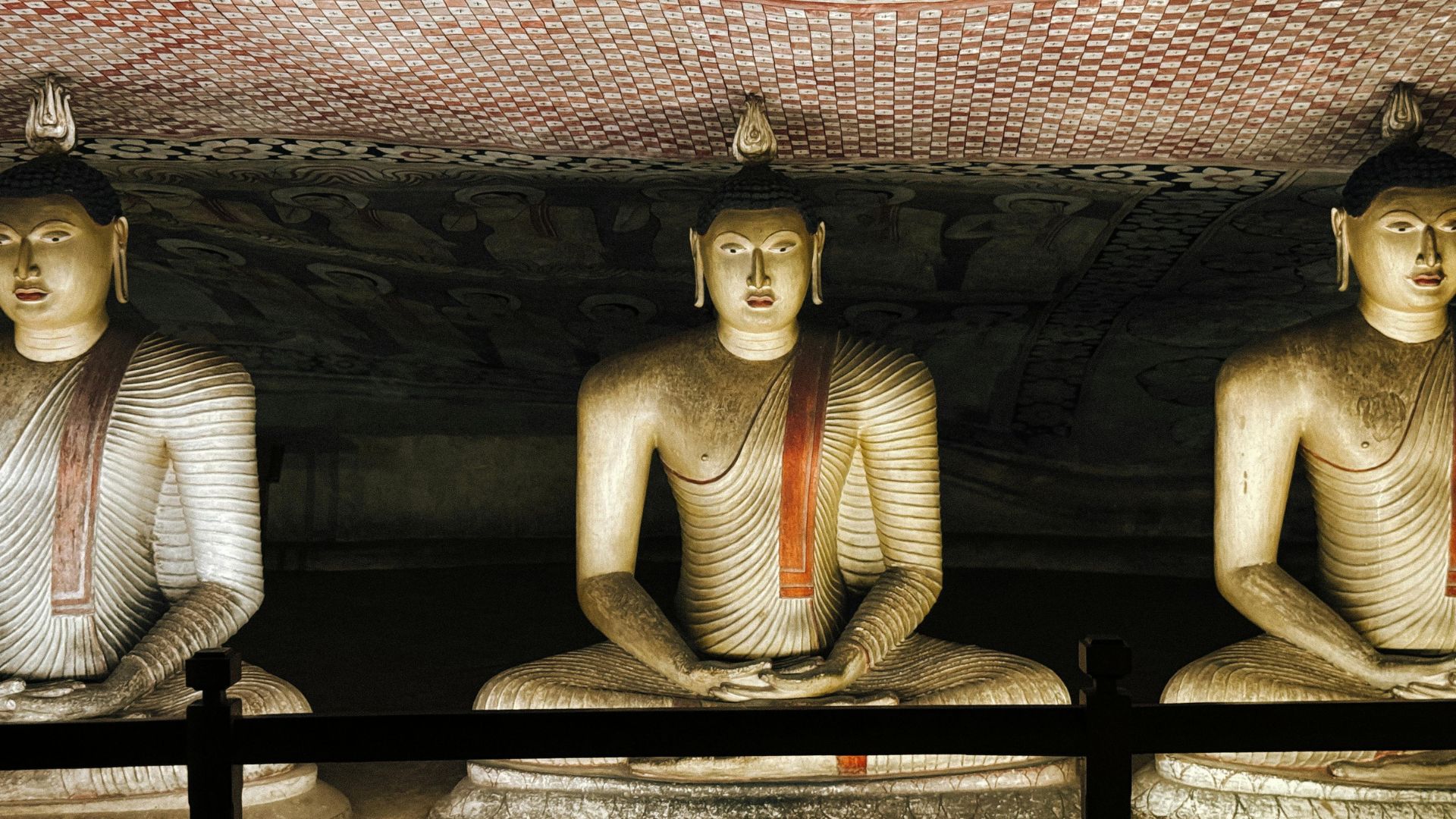
The second cave, Maharaja Viharaya, is the largest and most spectacular cave in the complex. It is a massive space filled with over 50 life-size Buddha statues. The most incredible feature of this cave is the painted ceiling. The ancient artists painted thousands of intricate patterns, lotus flowers, and scenes from the life of the Buddha directly onto the uneven rock ceiling. The colors are still vibrant after hundreds of years. The cave also features wooden statues of two ancient Sri Lankan kings, including King Valagamba who started the temple. In the center of the room, there is a sacred water vessel that constantly catches water dripping from the ceiling, even during severe droughts.
Cave 3: The Great New Monastery
The third cave is called Maha Alut Viharaya. It was built much later, during the 18th century, by a king from the Kandyan Kingdom. This cave is also filled with dozens of Buddha statues sitting in meditation. Because it was decorated later, the style of the paintings and statues is slightly different. The colors are brighter, and the details reflect the Kandyan artistic tradition. It shows how the temple continued to grow and evolve over many generations.
Caves 4 and 5: The Smaller Sanctuaries
The final two caves are much smaller but equally peaceful. Cave four contains a beautiful seated Buddha statue placed under a decorative archway. Cave five is the newest of the complex. It was previously used as a storehouse before being converted into a shrine. These smaller caves are usually quieter and offer a great place to sit quietly and reflect on the history surrounding you.
The Climb and the Panoramic Views
To reach the caves, you must climb a series of stone steps cut into the mountain. The climb takes about twenty to thirty minutes, depending on your fitness level. While the climb can be tiring in the heat, the views from the top are completely worth it. The entrance to the caves is located on a wide stone terrace. From this terrace, you can look out over the flat, green jungle plains that stretch for miles. On a clear day, you can even see the massive square shape of Sigiriya Rock Fortress standing in the far distance. It is a wonderful place to take photographs and enjoy the cool mountain breeze before entering the dark caves.
Common Mistakes When Visiting Dambulla
Visiting a sacred mountain temple requires respect and proper planning. Many tourists who try to visit Dambulla independently face frustrating challenges. Here are the most common mistakes travelers make and how a professional tour operator ensures a perfect visit.
Mistake 1: Ignoring the Strict Cultural Dress Code
Dambulla is one of the most sacred sites in Sri Lanka. The dress code is strictly enforced at the entrance gate. Both men and women must cover their shoulders and their knees. Furthermore, you cannot wear hats or caps inside the temple area. Many solo travelers arrive wearing shorts or sleeveless shirts after a long drive. They are denied entry and forced to buy overpriced cover-ups at the bottom of the hill. Ceylonmin Tours prepares you well in advance. Our guides ensure you are dressed respectfully before you even leave your hotel. We handle all the cultural requirements so you can enter the temple smoothly and with total respect.
Mistake 2: Climbing During the Hottest Part of the Day
The climb up to the caves is fully exposed to the sun. The rock surface absorbs the heat, making the climb very exhausting in the middle of the day. Because you must remove your shoes near the top, the hot stone terrace can severely burn your feet. Independent tourists often arrive at noon and have a terrible experience. Our expert team at Ceylonmin Tours carefully manages your schedule. We plan your visit for the early morning or late afternoon. This ensures the temperature is cool, the stone is safe to walk on barefoot, and you have enough energy to fully appreciate the caves.
Mistake 3: Hassles with aggressive Monkeys and Vendors
The path leading up to the temple is home to hundreds of wild monkeys. While they look cute, they can be aggressive if they think you have food. Solo travelers carrying snacks often get harassed by the monkeys or bothered by persistent street vendors selling trinkets. When you walk with a professional guide from Ceylonmin Tours, you have nothing to worry about. Our guides know how to navigate the path safely. They handle the local interactions, carry your water securely, and ensure you are not bothered by animals or aggressive sellers. You get to enjoy a peaceful, uninterrupted walk to the summit.
The Golden Temple Museum
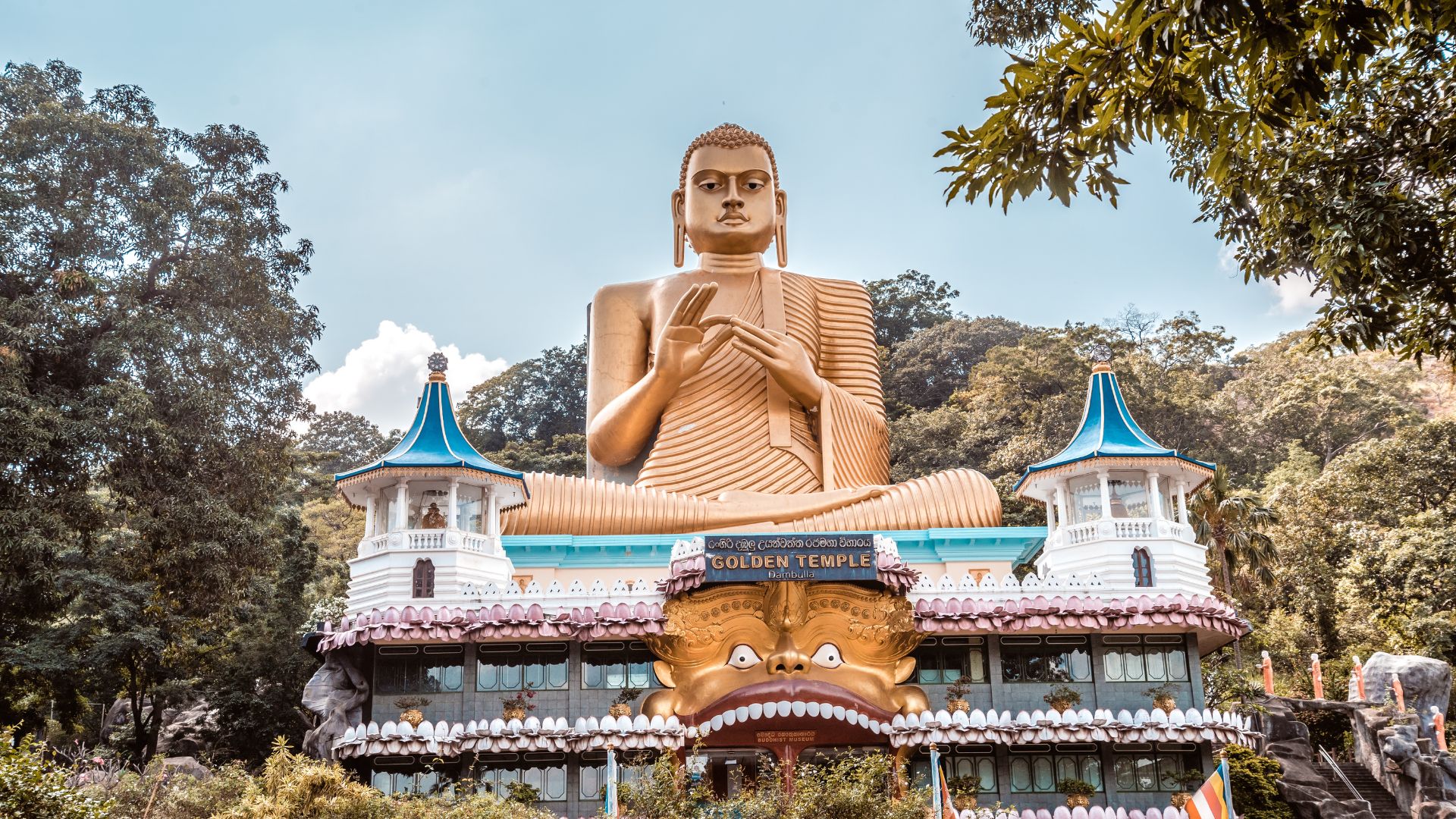
At the very bottom of the mountain, near the main road, you will see a massive, modern golden Buddha statue sitting on top of a building. This is the Golden Temple Museum. While it is completely modern and not part of the ancient caves, it is a very interesting place to visit. It contains a large collection of religious artifacts, old statues, and gifts given to the temple by foreign countries. It is a nice final stop before you leave the complex.
Experience the Spiritual Heart of Sri Lanka
The Dambulla Cave Temple is a place of deep peace and incredible artistic beauty. Exploring these ancient painted caves should be a highlight of your holiday. You should not be distracted by the heat, dress code confusion, or difficult climbs.
At Ceylonmin Tours, our goal is to make your journey through Sri Lanka’s cultural sites as comfortable and deeply educational as possible. We provide expert guides, luxury transport, and perfectly timed itineraries. We take care of every small detail so you can focus on the magnificent history in front of you. If you are ready to explore the hidden wonders of the Dambulla caves, please get in touch with us. Use our generic contact us form to message our team. Let us start designing an unforgettable cultural experience for you today.